Autonomous Driving Companies
Develops vision-only Full Self-Driving software deployed across its entire fleet of 6M+ vehicles globally. Holds the largest real-world autonomous driving dataset with 1.8B+ cumulative FSD miles driven by customers. Aims to launch a dedicated Cybercab robotaxi and license FSD technology to other automakers for a full self-driving future.
Robotaxi Operations
Value Chain Position
Chip Design
- •HW4 SoC: Current-gen autonomous driving chip powering all new Tesla vehicles. Designed in-house and manufactured by Samsung.
- •AI5 SoC: Next-gen chip purpose-built for the Cybercab robotaxi with significantly higher compute for end-to-end neural nets.
Software / AI
- •FSD (Full Self-Driving): End-to-end neural network that processes raw camera inputs into driving commands. Deployed across 6M+ vehicles collecting real-world training data.
- •Dojo Supercomputer: Custom training supercomputer using Tesla's D1 chips to train FSD models on video data at massive scale.
Vehicle Integration
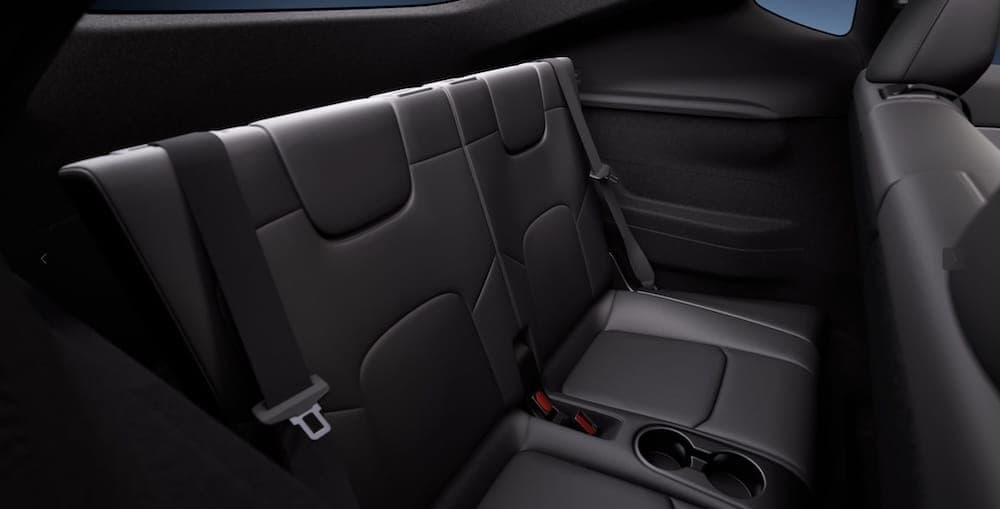
- •Cybercab: Purpose-built robotaxi with no steering wheel or pedals. Designed for autonomous ride-hailing with low production cost targets.
- •Model 3/Y Fleet: Existing vehicles with FSD hardware that can operate as supervised robotaxis via over-the-air software updates.
Fleet Operations
- •Austin & SF Launch: First commercial robotaxi service launched in June 2025 using employee-owned Model 3/Y vehicles with safety drivers.
Ride-hail / Logistics
- •Tesla App Ride-Hailing: Integrated ride-hailing in the Tesla app. Planning to open a third-party network allowing non-Tesla AV operators.
Autonomy Milestones
Tesla Motors incorporated July 2003 by Martin Eberhard and Marc Tarpenning. Elon Musk led the Series A in Feb 2004 with $6.5M and became chairman. The 'car as software platform' thesis would later make Tesla the first automaker to push autonomy via OTA updates.
Hardware 1 (HW1) introduced on Model S vehicles built after Sept 2014: Mobileye EyeQ3 chip, single forward camera, forward radar, ultrasonics. Musk announced 'Autopilot' branding at Oct 9 2014 'D' event (dual-motor reveal); software activation came a year later.
Autopilot V1 software activated via OTA (Tesla version 7.0): Traffic-Aware Cruise Control + Autosteer on HW1. First mass-market consumer car with hands-on highway autonomy. Within weeks customers posted YouTube videos of crashes from misuse.
First fatal Autopilot crash: Joshua Brown's Model S struck a tractor-trailer crossing US 27 in Williston FL May 7 2016: system failed to identify white trailer against bright sky. NHTSA investigation cleared Autopilot of defect; relationship with Mobileye fractured immediately.
HW2 (Hardware 2.0) launched with NVIDIA Drive PX 2 + 8 cameras + 12 ultrasonics + 1 radar. Musk claimed all cars from this point have 'full self-driving hardware': a claim that became the basis of multiple class-action lawsuits 8 years later.
HW2.5 deployed (after Mobileye breakup): minor compute upgrade to bridge to HW3. Tesla began building dedicated Autopilot/AI team; hired Andrej Karpathy from OpenAI as Director of AI June 2017.
HW3 (FSD Computer / Autopilot Hardware 3) launched: first fully in-house autonomous driving chip designed by Pete Bannon's silicon team; 144 TOPS, 7x compute over HW2. Musk claimed at Autonomy Day this hardware would enable robotaxis 'next year'.
FSD Beta limited release Oct 2020 to ~1,000 early-access customers: first city-streets autonomy for Tesla. Vision-based stack on HW3; required driver supervision. Public release of FSD Beta would gradually widen over the next 2 years.
FSD Beta v9 released with vision-only Tesla Vision stack: radar removed from production Model 3/Y starting May 2021. Most aggressive sensor-stack reduction in the industry; Mobileye and competitors retained radar+lidar.
FSD Beta opened to all FSD-purchased customers in North America (~400K cars): removed safety-score gating. Largest single ADAS fleet expansion in history; brought Tesla's supervised-FSD miles into multi-billion territory by 2024.
HW4 (AI4) starts shipping in refreshed Model S and Model Y: 5x compute over HW3. New cameras (5MP vs 1.2MP), updated FSD Computer with Tesla-designed Dojo-derived silicon. Created the HW3/HW4 schism that would lead to 2025 lawsuits.
FSD Beta v11 released: 'single stack' merging highway and city code into one unified neural-network-heavier architecture. Cleared a 6-month delay; precursor to v12 end-to-end.
FSD v12 released: first end-to-end neural network replacing 300K+ lines of hand-coded C++ rules with ~3M video clips. Musk called it 'the most fundamental change'. Raised the bar for end-to-end imitation learning across the industry.
Cybercab robotaxi unveiled at 'We, Robot' event Oct 10 2024 in Burbank: no steering wheel or pedals, target $30K, target production 'before 2027'. Stock dropped 9% next day on muted reception. First Cybercab rolled off Giga Texas line Feb 2026.
FSD Supervised launched in China: first non-domestic L2+ city driving deployment for Tesla. Initially restricted by Chinese data-privacy rules; rolled out via OTA after Tesla agreed to localize map/training data.
FSD v13 rolled out to HW4 vehicles with restored speed-limit and unprotected-turn handling: introduced 'Temporal Intelligence' video buffer (15-sec) for processing video clips vs single frames. Considered first true 'hands-off attentive' grade FSD.
Robotaxi service launched in Austin June 22 2025 with safety drivers in passenger seat: initial fleet ~10 Model Ys. Heavily geofenced, manually monitored remotely. First Tesla 'commercial' robotaxi attempt.
SF Bay Area Robotaxi launches with safety drivers (CA law requires): second Tesla robotaxi city after Austin. Tesla bet that 'cheap fleet of millions' beat Waymo's 'expensive fleet of thousands'.
FSD v14 launched on HW4: '10x larger neural network', described by Musk as 'second-most-important AI/Autopilot update since v12'. End-to-end vision-only stack with new world-model architecture. Began rolling 14.1, 14.2 versions through Q1 2026.
First Cybercab rolled off Giga Texas line; volume production targeted April 2026: initial run hand-built; HW5 (AI5) chip production debut. Cybercab supplier base required ramp through Q2.
Unsupervised Robotaxi launches in Dallas + Houston: Tesla's first 'no in-vehicle safety driver' commercial robotaxi service (remote teleoperators monitor). HW4 + FSD v14.2; geofenced ~50 sq mi each city.
Tesla facing up to $14.5B in cumulative class-action lawsuits across US (HW3 fraud), Europe (5,700+ HW3 claimants from 37 countries), Australia (thousands), and China (1M+ vehicles). 'Hardware Statement' from 2016 Autopilot 2.0 launch became central evidence in shareholder fraud certification (Aug 2025).
Prefer Sterling in Google
Add sterlingcharts.com as a preferred source so our charts can appear with a preferred badge in Google Top Stories, AI Mode, and AI Overviews.