 General Motors
Compare General Motors…General Motors Company designs, builds, and sells trucks, crossovers, cars, and automobile parts and accessories worldwide.
Register for a premium account to gain access to Sterling AI.
Get StartedThings you can ask Sterling:
General MotorsGeneral Motors Company designs, builds, and sells trucks, crossovers, cars, and automobile parts and accessories worldwide.
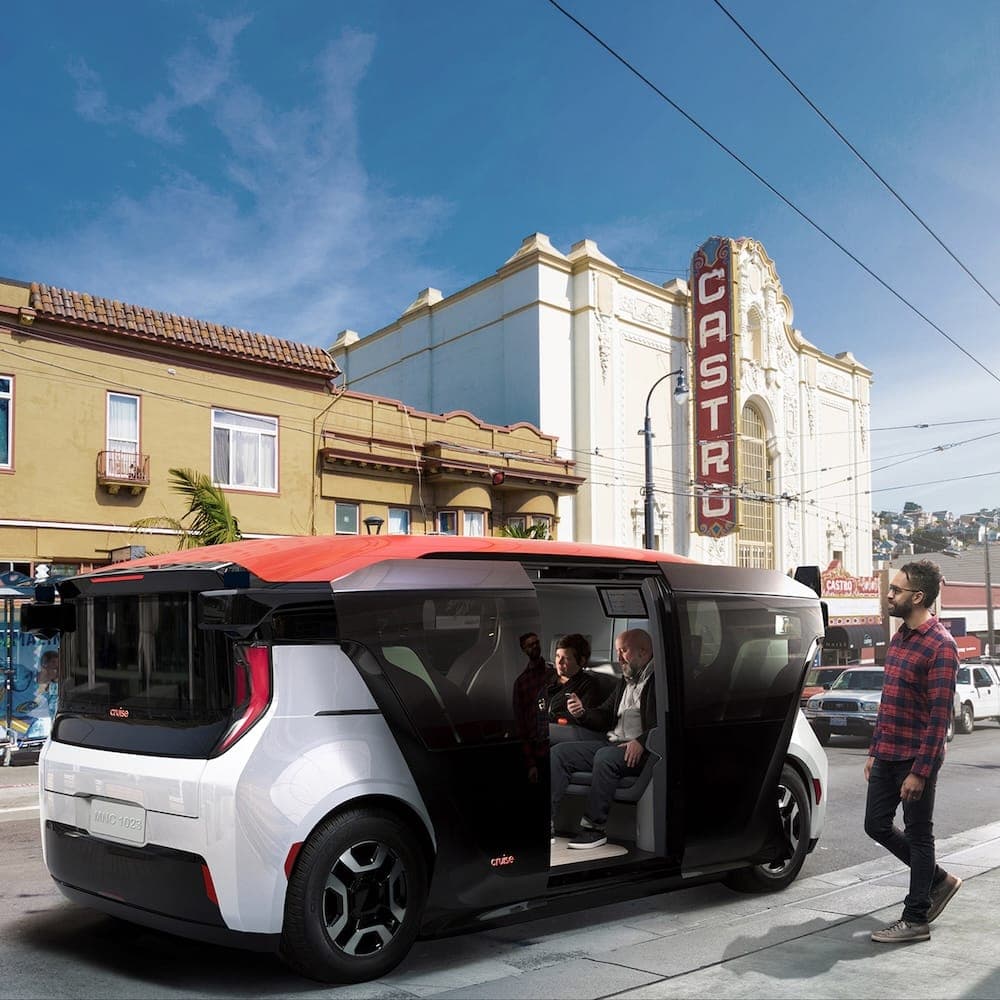
GM's autonomous driving subsidiary that paused public robotaxi operations after a 2023 pedestrian incident in San Francisco. Previously operated with a fleet of autonomous Origin vehicles and received $10B+ in cumulative GM investment. Restructuring to refocus on supervised autonomy and advanced ADAS features for production GM vehicles.
Software / AI
Vehicle Integration
Key Milestones
Cruise Automation founded in San Francisco by Kyle Vogt (Twitch co-founder, MIT) and Dan Kan; backed by Y Combinator. Original product was a $10K aftermarket retrofit kit for Audi A4/S4 to enable highway autopilot — pivoted to full-stack robotaxi after early prototypes.
GM acquired Cruise for $581M cash + GM stock (initial 80% stake; $1B+ total enterprise value) — fastest GM tech acquisition ever. Cruise stayed an independent SF-based subsidiary; Vogt continued as CEO/CTO.
SoftBank Vision Fund invested $2.25B (initial $900M, $1.35B at commercial launch) — valued Cruise at $11.5B post-money. First major external Cruise investor; SoftBank later wrote down most of this stake.
Honda invested $2.75B for 5.7% stake — joint development of purpose-built robotaxi (would become the Cruise Origin). Cruise valuation reached $14.6B; Origin unveiled Jan 2020.
Origin purpose-built driverless shuttle unveiled in San Francisco — no steering wheel, no pedals, bidirectional. Designed jointly with Honda for ride-share and goods delivery. Production was repeatedly delayed; never launched commercially.
California DMV granted fully driverless testing permit in San Francisco — second permit nationwide after Waymo. Allowed Cruise to remove safety drivers within designated streets in SF's Sunset / Richmond districts.
First public driverless taxi ride in San Francisco Nov 2021 — CEO Kyle Vogt rode with no safety driver on a closed loop in Sunset District. Public-facing fully-driverless beta opened to selected SF residents Feb 2022.
First fared (paid) driverless robotaxi rides in San Francisco — beat Waymo to commercial L4 in a major US city by 14 months. Initial geofence 30 sq mi in nighttime hours only.
California Driverless Deployment permit granted — first AV company licensed to charge fares in a major US city. Cruise opened paid waitlist immediately; achieved revenue-generating L4 ahead of Waymo.
Driverless commercial ride-hailing launched in San Francisco at scale — open to general public via Cruise app. Peak fleet ~300 Bolt EVs operating overnight, expanded to daytime June 2023 (which led to chaos).
Cruise hits and drags pedestrian Jennifer in San Francisco Oct 2 2023 — pedestrian thrown by hit-and-run driver into Cruise vehicle's path; Cruise dragged her ~20 feet. California DMV suspended Cruise's deployment permit Oct 24, halting all paid robotaxi service. Foundation of GM's later $10B+ writedown.
CEO Kyle Vogt resigns Nov 19 2023 amid permit revocation; Mo Elshenawy and Craig Glidden named co-presidents. Cruise paused operations nationwide. Former NHTSA exec hired to lead safety review.
Resumed supervised manual mapping in Phoenix and Houston after 6-month pause — humans driving Cruise vehicles to refresh HD maps. First sign of operational restart post-suspension.
GM announced Dec 10 2024 wind-down of Cruise robotaxi business — ~$10B written off cumulatively across investments. CEO Mary Barra cited 'increasingly difficult AV market' and 'capital intensity'.
Cruise merger into GM completed; team folded into Super Cruise development — Cruise robotaxi operation officially ended. ~50% of staff laid off; remainder rolled into GM ADAS product team in Detroit/SF.
GM restarted personal-vehicle driverless development under Advanced Driver Assist program — Sterling Anderson (ex-Aurora, ex-Tesla Autopilot) hired June 2025 to lead. Refocused on supervised L2+/L3 for retail vehicles vs robotaxi.