EV Battery Market Share by Company
Explore the companies powering EVs and the energy grid. From lithium suppliers to next-gen solid-state innovators, discover who's shaping the future of energy storage.
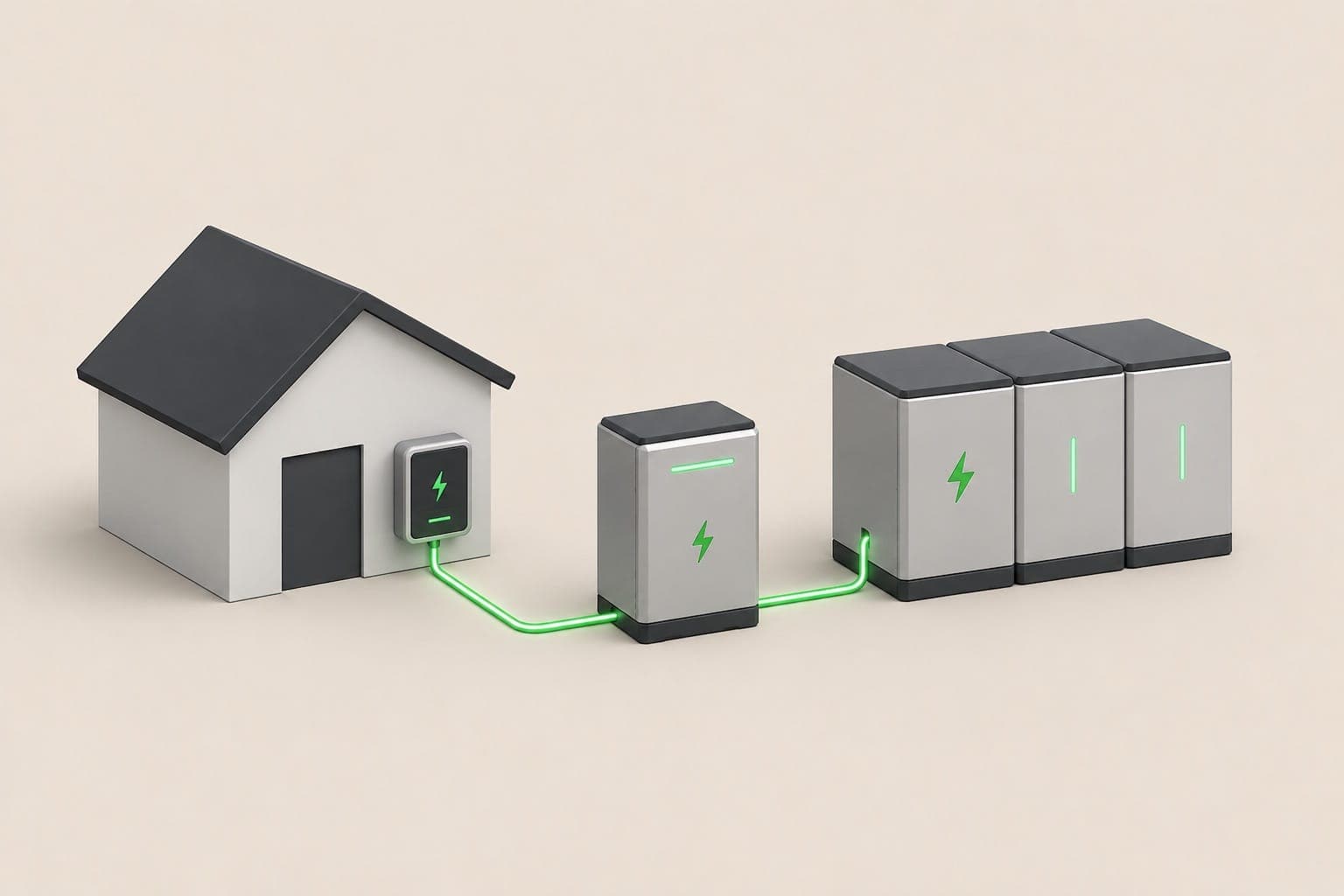
The Batteries sector on Sterling tracks 15 companies, led by CATL (39.2%), BYD (16.4%), LG Energy Solution (9.5%) by market share.
Batteries market share by company (2025)
| # | Company | Market share |
|---|---|---|
| 1 | CATL300750.SZ SNE Research FY2025; 464.7 GWh installed (+35.7% YoY) | 39.2% |
| 2 | BYDBYDDY SNE Research FY2025; 194.8 GWh; share dipped from 16.9% in 2024 | 16.4% |
| 3 | LG Energy Solution373220.KS SNE Research FY2025; share down from 10.8% in 2024 | 9.5% |
| 4 | CALB3931.HK SNE Research FY2025 | 4.6% |
| 5 | SNE Research FY2025; SK Innovation subsidiary | 4% |
| 6 | PanasonicPCRFY SNE Research FY2025; share declining as Tesla mix shifts | 3.6% |
| 7 | EVE Energy300014.SZ SNE Research FY2025 | 3.4% |
| 8 | Gotion High-Tech002074.SZ SNE Research FY2025 | 3.3% |
| 9 | Samsung SDI006400.KS SNE Research FY2025; share down on premium-EV demand softness | 2.7% |
| 10 | Sunwoda Electronic300207.SZ SNE Research FY2025 | 2.4% |
| 11 | Others REPT BATTERO, Farasis, AESC, Northvolt (in restructuring), and tail | 10.9% |
Batteries at a Glance
IEA Energy-Sector Battery Demand
IEA EV Battery Demand by Region
Battery & Energy Storage Segments
Cells & Manufacturing
The cell manufacturers producing lithium-ion batteries at massive scale: from LFP to high-nickel chemistries powering EVs worldwide.

CATL
World's #1: 39% global share (2025), 500+ GWh capacity across LFP and NMC.

BYD Company
#2 globally: Blade Battery pioneer with 280+ GWh capacity.

LG Energy Solution
#3 globally: pouch and cylindrical cells for GM, Hyundai, Honda.
Panasonic
Tesla's primary cell supplier: 4680 and 2170 cylindrical formats.
Samsung SDI
90 GWh capacity: prismatic cells for BMW, Stellantis, Rivian.
Grid & Utility Storage
Companies deploying battery storage at grid scale: stabilizing renewable energy, providing backup power, and replacing gas peakers.

Tesla Energy
31+ GWh deployed in 2024: Megapack is the fastest-growing storage product.
CATL
EnerC/EnerOne containers powering multi-GWh utility projects globally.
BYD Company
BYD Cube storage systems for commercial and utility customers.
LG Energy Solution
Major utility ESS supplier across US and European markets.
Battery Technology
Next-generation battery technologies promising higher density, faster charging, and improved safety: from solid-state to sodium-ion.

QuantumScape
Leading solid-state: lithium-metal cells with 80% faster charging target.

Solid Power
Sulfide solid-state cells licensed to BMW and Ford.
CATL
Condensed-matter battery for aviation; sodium-ion for low-cost EVs.
Samsung SDI
Solid-state pilot line targeting 900 Wh/L energy density by 2029.
Raw Materials & Economics
The upstream supply chain: lithium miners, raw material processors, and the economics driving battery cost reduction.

Albemarle
World's #1 lithium producer: brine in Chile, hard rock in Australia.
CATL
Brunp subsidiary recycles 120K+ tonnes annually; 99.6% nickel recovery.
BYD Company
Vertically integrated from lithium mining through finished vehicles.
Tesla Energy
Building lithium refinery in Texas; long-term offtake agreements.
Emerging Battery Technology
Solid-State Batteries
Replaces the flammable liquid electrolyte with a solid one (ceramic, sulfide, or polymer). Pairs naturally with a lithium-metal anode to roughly double energy density, while dramatically improving safety and fast-charging tolerance.
Targeting ~900 Wh/L vs. ~600 Wh/L for today's best lithium-ion
Mass production targeted 2027 to 2030
Who is investing
QuantumScape
B-sample QSE-5 cells shipping to Volkswagen for validation
Solid Power
Sulfide cells in A-sample testing with BMW and Ford
Samsung SDI
Pilot line at Suwon targeting 900 Wh/L by 2029
CATL
Condensed-matter cell shipping; full solid-state in lab
LG Energy Solution
Roadmap for polymer-based solid-state by late decade
Sodium-Ion Batteries
Swaps lithium for sodium, an element thousands of times more abundant. Lower energy density than lithium-ion, but cheaper, safer, and far more tolerant of cold weather. A natural fit for entry-level EVs and stationary storage.
About 30% lower cell cost than LFP at scale
Initial volume in 2025 to 2027, primarily in China
Who is investing
CATL
Second-generation Naxtra cells launching in commercial EVs
BYD Company
Building sodium-ion lines for entry-level Seagull and storage
EVE Energy
Large-format sodium-ion cells for grid storage projects

Gotion High-Tech
Sodium-ion line slated for low-cost EVs and ESS
Silicon-Anode Cells
Replaces or supplements graphite with silicon in the anode. Silicon stores roughly 10x more lithium per gram, lifting pack energy density 20% to 40% without changing the cathode. The challenge is swelling, which hurts cycle life.
20% to 40% higher energy density vs. graphite
Already in premium cells; volume ramps through 2026 to 2028
Who is investing
Tesla Energy
4680 cells use a silicon-rich anode in latest revisions
Panasonic
Partnered with Sila on silicon anode material for Kansas plant
Samsung SDI
High-nickel cells with silicon-graphite composite anode
Condensed and Semi-Solid
A bridge between today's liquid cells and full solid-state. Uses a gel-like or condensed electrolyte to push energy density past 400 Wh/kg with most of the safety upside of solid-state, but at manufacturable scale today.
Up to ~500 Wh/kg, roughly 2x today's automotive cells
Already flying; automotive launch expected mid-decade
Who is investing
CATL
500 Wh/kg condensed battery shipping for electric aviation
EVE Energy
Semi-solid pouch cells in pilot for premium EVs
Battery Value Chain: Who Does What
CATLBYDLG Energy SolutionPanasonicSamsung SDI SK OnTesla EnergyAlbemarleQuantumScapeSolid Power
 CALBEVE Energy
Battery Production Capacity by Manufacturer
Tesla Energy Storage Deployed
Companies in the Batteries sector (15)
Related industries
Frequently asked questions
What is the Batteries sector?
Explore the companies powering EVs and the energy grid. From lithium suppliers to next-gen solid-state innovators, discover who's shaping the future of energy storage.
Which companies lead the Batteries sector?
Sterling tracks 15 companies in Batteries, led by CATL (39%), BYD (16%), LG Energy Solution (10%), CALB (5%), SK On (4%) and Panasonic (4%).
How can I invest in the Batteries sector?
Publicly traded names in Batteries include Tesla Energy (TSLA), Panasonic (PCRFY), QuantumScape (QS), Solid Power (SLDP) and Albemarle (ALB). Compare them side by side on Sterling. Data last updated August 24, 2026.


Prefer Sterling in Google
Add sterlingcharts.com as a preferred source so our charts can appear with a preferred badge in Google Top Stories, AI Mode, and AI Overviews.