BYD Sales Availability
Countries and regions where BYD EVs are sold
Vertically integrated giant producing Blade LFP batteries, EV powertrains, and grid-scale energy storage systems. Second-largest battery maker globally with ~17% market share and 280+ GWh production capacity. Leverages in-house battery production to undercut EV competitors on pricing while growing its energy storage division for utility and commercial customers.
Key Milestones
Founded in Shenzhen by Wang Chuanfu and Lu Xiang Yang with RMB 2.5M and 20 employees as a contract manufacturer of NiCd cells for Motorola handsets. Wang famously hand-built equivalents of Japanese automated cell-coating lines using semi-manual labor — a vertical integration / low-cost-engineering ethos that defines BYD's later Blade Battery and EV ascent. By 2002 BYD is the world's #2 mobile-phone battery supplier.
BYD acquires Tsinchuan Automobile (Xi'an) for ~$67M to enter passenger vehicles — the controversial pivot that combines battery expertise with car manufacturing. Wang Chuanfu's thesis: vertical integration of cell + pack + powertrain + vehicle gives a structural cost advantage. Subsequent ICE-to-PHEV-to-pure-EV transition over 20 years validates the bet.
Berkshire Hathaway / MidAmerican Energy invest $230M for a 9.9% stake at HK$8/share — Charlie Munger's fingerprints on the deal famously called Wang Chuanfu "a combination of Thomas Edison and Jack Welch". The validation accelerates BYD's PHEV F3DM launch (Dec 2008, world's first mass-produced plug-in hybrid) and locks in long-term institutional capital for the LFP chemistry bet.
Becomes world's largest plug-in vehicle (PHEV+BEV) manufacturer by units — overtaking Tesla. Tang/Qin/e6 lineup powered exclusively by in-house LFP. Cell capacity ~10 GWh/yr by year-end. The vertical-integration thesis that founders Wang Chuanfu and Lu Xiangyang articulated in 1995 is now proven at scale.
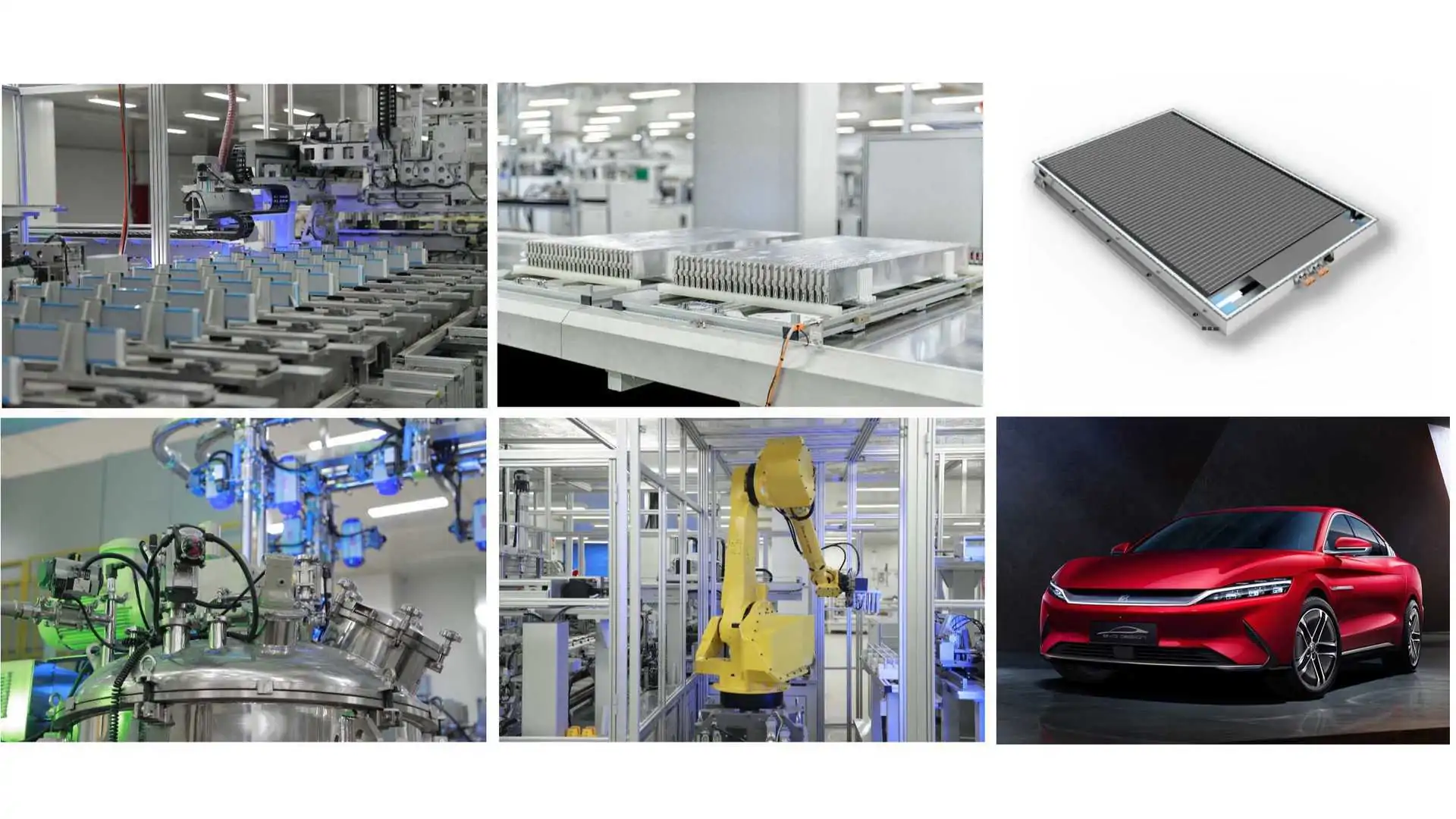
Launched the Blade Battery — long, prismatic LFP cell (96cm or 120cm long, 9cm wide, 1.35cm thick) engineered for cell-to-pack (CTP) integration without modules. Nail-penetration test (passed without thermal runaway) becomes industry-defining safety demonstration. Pack-level energy density ~140 Wh/kg matches early NMC packs while costing ~30% less; revives LFP's competitive position globally.
Han EV became first BYD vehicle powered by Blade Battery — 605 km CLTC range, 3.9-second 0-100 km/h. Sets the template for Tesla Model 3 / Model Y LFP variant launched globally 2021 onward. Han EV becomes BYD's flagship sedan and demonstrates Blade's commercial viability at premium price points.
Established FinDreams Battery as standalone subsidiary and began external Blade Battery sales — first non-BYD-vehicle customer was Hongqi (FAW). Historically captive battery production now opens to compete with CATL at OEM accounts. By 2024, FinDreams supplies Toyota bZ3, Tesla, Ford, Geely Galaxy and 12+ external programs.
Signed strategic supply agreement to provide Blade Batteries to Tesla Model Y produced in Berlin — confirmed by FinDreams executives. First competing-OEM-of-China supply deal of significance; Tesla diversifies away from CATL/LGES/Panasonic single-source dependency.
Toyota bZ3 sedan launched in China powered by FinDreams (BYD) LFP Blade Battery — first Toyota mass-market EV with non-PEVE batteries; 615 km CLTC range from 65 kWh pack. The cross-cultural validation moment for BYD: Toyota validates BYD chemistry / safety standards after century of Japanese auto-supply hierarchy.
Surpassed CATL in Chinese-domestic LFP installations for the first time on a quarterly basis — Q1 2024 BYD ~28 GWh LFP installed vs CATL ~25 GWh LFP (CATL still leads overall mix). Tipping point in China LFP-supplier hierarchy; BYD's vertical-integration cost advantage compounds.
Launched second-generation Blade Battery — pack-level energy density ~210 Wh/kg (up from 140 Wh/kg gen-1), faster 3C charge rates, optimized cell stacking. Powers refreshed Han L, Song L, and Sealion 7 models from late 2024.
FinDreams crossed cumulative 100 GWh of Blade Battery shipments since 2020 launch — in 4.5 years, equivalent to ~6M Blade-equipped EVs. Demonstrates production-scale ramp pace to rival CATL's CTP / Qilin production curves.
Unveiled Super e-Platform with 1,000 kW (1 MW) DC fast-charging capability for next-gen BYD vehicles — first 1 MW commercial automotive charging architecture. Han L EV demonstrates 5-minute / 400 km charge. Requires bespoke 1,000V battery architecture and proprietary DC fast-charging infrastructure (BYD building 4,000 1 MW chargers in China by 2026).
Hungary Szeged passenger-vehicle plant + Komárom battery pack plant complex completes initial ramp — BYD's first European EV manufacturing site, anchored by Atto 3 / Dolphin / Seal production. Pack-assembly capacity 25 GWh/yr; vehicle output 200k units/yr at full Phase 1.
FY2025 BYD reports 4.27M NEV unit sales (PHEV + BEV combined), passing Toyota Asia-Pacific in EV+ICE total volume in China. BYD becomes the world's largest auto manufacturer by NEV units; FinDreams cell shipments 195 GWh, ~16.4% global share per SNE Research.
Unveiled third-generation Blade Battery at FinDreams Tech Day — 240 Wh/kg pack-level energy density, 5C peak charge, 1,500 km CLTC range in 150 kWh form factor. Targets next-generation Han L+, Tang L+, and emerging Yangwang U9 supercar variant from 2027.