Space Economy Market by Company
The commercial space economy is shifting from government-funded missions to private, reusable, recurring-revenue businesses. This sector tracks the public pure-plays and the major private players across launch, satellite communications, earth observation, direct-to-cell connectivity, and lunar access.
The Space sector on Sterling tracks 12 companies, led by Iridium Communications (32.7%), Rocket Lab (22.6%), Redwire (12.6%) by share of FY2025 revenue across the eight public pure-plays, excluding the private SpaceX and Blue Origin.
Space market share by company (2025)
| # | Company | Market share |
|---|---|---|
| 1 | Share of tracked-roster FY2025 revenue across the eight public pure-plays; SpaceX and Blue Origin are excluded because neither reports audited revenue. FY2025 revenue $872M. Mature satellite-communications operator; service, equipment and engineering revenue across a 66-satellite LEO constellation. | 32.7% |
| 2 | Rocket LabRKLB FY2025 revenue $602M. Launch plus space systems; space systems is the larger half of revenue. | 22.6% |
| 3 | RedwireRDW FY2025 revenue $335M. | 12.6% |
| 4 | FY2026 revenue $308M (fiscal year ended January 31, 2026). Fiscal year ends in January, so FY2026 is the closest match to calendar 2025. | 11.6% |
| 5 | FY2025 revenue $210M. | 7.9% |
| 6 | FY2025 revenue $160M. First full year as a public company following its 2025 IPO. | 6% |
| 7 | BlackSkyBKSY FY2025 revenue $107M. | 4% |
| 8 | AST SpaceMobileASTS FY2025 revenue $71M. Pre-commercial. Revenue is largely government and development contracts, not service revenue, despite a market value far above the rest of this table. | 2.7% |
Space at a Glance
Structural Signals
- •Reusable launch has cut the cost of reaching orbit by roughly an order of magnitude over the past decade, led by SpaceX. Rocket Lab's Neutron and Blue Origin's New Glenn are now entering the medium-to-heavy class.
- •Direct-to-cell is the newest commercial frontier. AST SpaceMobile and the Starlink and T-Mobile partnership aim to connect ordinary, unmodified smartphones straight to satellites.
- •Earth observation has matured into a recurring-revenue data business. Planet Labs and BlackSky sell imagery and analytics subscriptions rather than one-off satellites.
- •Commercial lunar access opened in February 2024 when Intuitive Machines' IM-1 Odysseus became the first private spacecraft to soft-land on the Moon, followed by Firefly's Blue Ghost in 2025.
The Four Commercial Layers
| Layer | What it sells |
|---|---|
| Launch | A ride to orbit (and, for some vehicles, a ride back). Cadence and reuse, not published dollars per kilogram. |
| Satellite communications | Connectivity from orbit: broadband, voice and IoT, and direct-to-cell to unmodified phones. |
| Earth observation | Imagery and analytics as a recurring data business. Optical, SAR, hyperspectral, and thermal. |
| Infrastructure and lunar | Hardware others fly, plus commercial lunar landing under NASA CLPS. |
Spacecraft Launched in 2025 by User
Commercial Lunar Landings
| Mission | Operator | Outcome |
|---|---|---|
| IM-1 Odysseus | Intuitive MachinesLUNR | Soft landing. Tipped about 30 degrees. NASA called the CLPS delivery a success. First commercial US lunar landing since Apollo 17. |
| Blue Ghost Mission 1 | Firefly AerospaceFLY | Upright, stable landing. First fully successful commercial lunar landing. NASA CLPS payloads operated through the lunar day. |
| IM-2 Athena | Intuitive MachinesLUNR | Reached the surface but came to rest on its side in a crater. Surface operations ended in under 13 hours. CLPS shots-on-goal frame. |
| IM-3 | Intuitive MachinesLUNR | Not flown. NASA CLPS CP-11 / Lunar Vertex. Wikipedia and NASA list a second-half 2026 target as of August 2026. |
The Players
| Company | Founded |
|---|---|
| Blue OriginPrivate | 2000 |
| Iridium CommunicationsIRDM | 2001 |
| SpaceXSPCX | 2002 |
| Rocket LabRKLB | 2006 |
| Planet LabsPL | 2010 |
| Intuitive MachinesLUNR | 2013 |
| BlackSkyBKSY | 2013 |
| Firefly AerospaceFLY | 2017 |
| AST SpaceMobileASTS | 2017 |
| RedwireRDW | 2020 |
Where They're Based
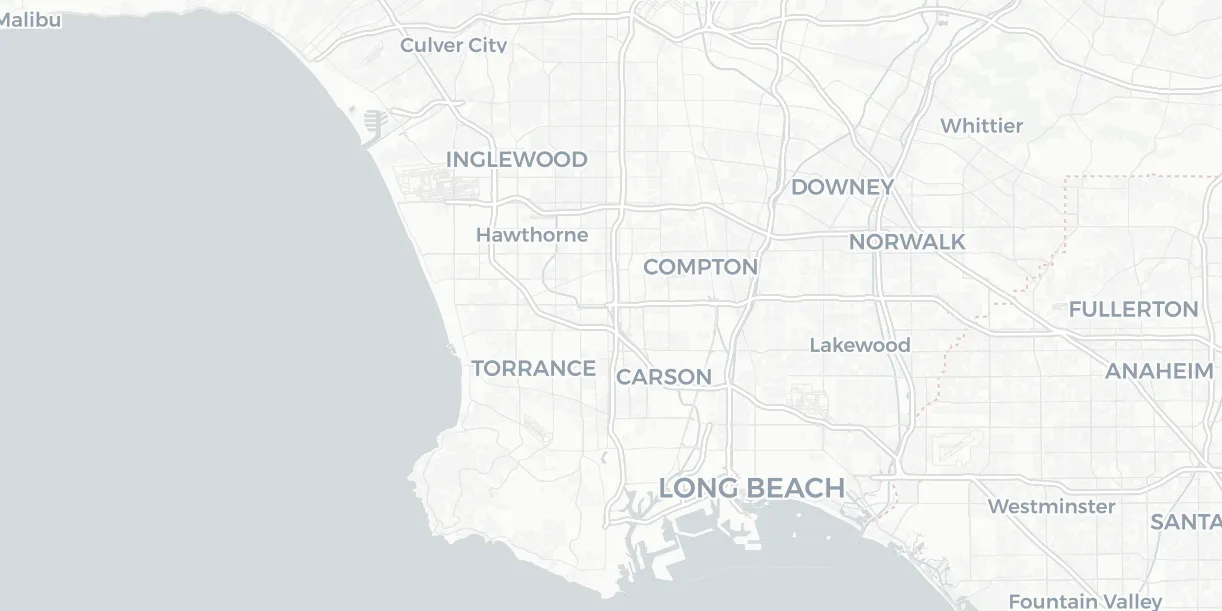
The densest space hub on Earth. Long Beach, Hawthorne, El Segundo, and Redondo Beach pack in more rocket and satellite builders than anywhere else in the world.
Companies in the Space sector (12)
Related industries
Frequently asked questions
What is the Space sector?
The commercial space economy is shifting from government-funded missions to private, reusable, recurring-revenue businesses. This sector tracks the public pure-plays and the major private players across launch, satellite communications, earth observation, direct-to-cell connectivity, and lunar access.
Which companies lead the Space sector?
Sterling tracks 12 companies in Space, led by Iridium Communications (33%), Rocket Lab (23%), Redwire (13%), Planet Labs (12%), Intuitive Machines (8%) and Firefly Aerospace (6%) by share of FY2025 revenue across the eight public pure-plays, excluding the private SpaceX and Blue Origin.
How can I invest in the Space sector?
Publicly traded names in Space include Rocket Lab (RKLB), AST SpaceMobile (ASTS), Intuitive Machines (LUNR), Planet Labs (PL) and Redwire (RDW). Compare them side by side on Sterling. Data last updated August 24, 2026.


Prefer Sterling in Google
Add sterlingcharts.com as a preferred source so our charts can appear with a preferred badge in Google Top Stories, AI Mode, and AI Overviews.